
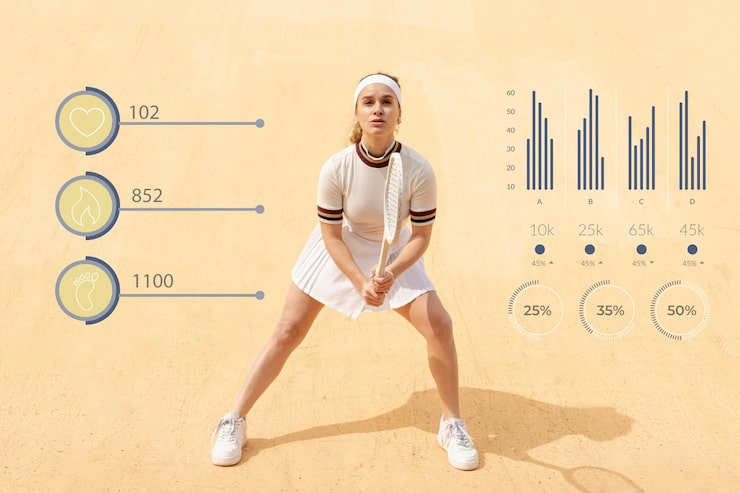
Badminton player statistics have become one of the most valuable tools for analyzing performance in modern badminton. For fans, coaches, and players, these numbers tell a deeper story about how athletes compete, improve, and dominate the global stage.
Badminton is a fast-paced sport where every rally, smash, and defensive shot can influence the outcome of a match. Because of this intensity, detailed statistical analysis has become increasingly important in understanding player performance.
When analysts examine badminton player statistics, they often look beyond simple wins and losses. Data related to rally length, smash success rate, and defensive recovery provides insights into how players approach each match.
These statistics help reveal the strategies that separate elite players from the rest of the competition.
Table of Contents
ToggleThe Importance of badminton player statistics in Professional Competition
Modern sports rely heavily on data-driven analysis, and badminton is no exception. Statistical records allow coaches and analysts to evaluate how well players perform under different conditions.
In major competitions organized by the Badminton World Federation, detailed match data is collected and analyzed after every game.
The use of badminton player statistics helps teams understand patterns in performance, including shot accuracy, rally control, and point conversion rates.
These insights allow players to refine their strategies and improve weaknesses identified during competition.
Fans also benefit from statistical insights because they provide a clearer understanding of what happens during high-level matches.
Instead of simply watching a rally, viewers can appreciate the technical precision behind each shot.
Key Metrics Used in Badminton Performance Analysis
Professional analysts examine several types of data when studying player performance. These numbers help explain how athletes control the pace and outcome of matches.
Common performance indicators include smash success rate, net shot accuracy, and rally win percentage.
These metrics form the foundation of badminton player statistics used in international competitions.
For example, a player with a high smash success rate demonstrates strong attacking ability.
Meanwhile, defensive statistics reveal how well players respond to aggressive shots from their opponents.
Together, these numbers create a detailed profile of a player’s strengths and weaknesses.
Understanding these metrics helps coaches design training sessions that target specific areas of improvement.
Legendary Players and Their Statistical Dominance
Many badminton legends have built their reputations through extraordinary statistical performances.
Players like Lin Dan achieved remarkable success by maintaining high winning percentages across major tournaments.
Similarly, the legendary Lee Chong Wei consistently ranked among the world’s best due to his incredible match consistency.
The analysis of badminton player statistics from these athletes reveals why they dominated international competitions.
Their ability to maintain control during long rallies and execute precise attacking shots allowed them to outperform their rivals.
Fans and analysts often revisit these statistical records to understand how these champions achieved such sustained excellence.
Their achievements remain benchmarks for aspiring players around the world.
Rising Stars and Modern Performance Data
Badminton continues to evolve as new players emerge with advanced training methods and improved physical conditioning.
Modern athletes like Viktor Axelsen have embraced data-driven training to enhance their performance.
Coaches frequently analyze badminton player statistics to evaluate how players perform against different opponents.
This information helps athletes adapt their playing styles to match the strengths and weaknesses of their competitors.
Young players entering the professional circuit often study statistical trends to understand how top players approach matches.
As data analysis becomes more sophisticated, the next generation of badminton champions may rely even more heavily on performance analytics.
This trend is shaping the future of the sport.
Women’s Badminton and Performance Analytics
Statistical analysis is equally important in women’s badminton competitions.
Players such as Carolina Marín have demonstrated how data-driven preparation can influence match outcomes.
Her aggressive playing style and remarkable stamina are reflected in her match statistics and tournament performances.
By studying badminton player statistics, coaches can analyze how female athletes manage pace, shot selection, and defensive positioning.
These insights allow players to refine their strategies and compete more effectively against elite opponents.
Women’s badminton has become increasingly competitive, with players from multiple countries reaching the highest levels of the sport.
Statistics help highlight these achievements and track the progress of emerging talents.
Technology’s Role in Collecting Player Data
Advancements in sports technology have transformed how badminton matches are analyzed.
Modern tournaments often use high-speed cameras and tracking systems to record every shot and movement on the court.
These technologies generate detailed badminton player statistics that analysts use to evaluate performance.
Video replay systems allow coaches to review rallies and study decision-making patterns during matches.
Data collected from these systems helps identify tactical opportunities that might not be obvious during live play.
Athletes also benefit from wearable fitness technology that monitors physical performance during training sessions.
Together, these tools provide a comprehensive picture of player development.
The Role of Analytics in Training and Strategy
Training methods in professional badminton have become increasingly sophisticated.
Coaches rely on detailed statistical reports to identify strengths and weaknesses in player performance.
Using badminton player statistics, training sessions can be tailored to improve specific skills such as net play, smash accuracy, or defensive positioning.
Players also study opponent statistics to prepare for upcoming matches.
Understanding an opponent’s preferred shots or rally patterns can provide a strategic advantage during competition.
This analytical approach has become essential for success at the highest levels of the sport.
Athletes who adapt quickly to statistical insights often gain a competitive edge.
Fan Engagement Through Statistical Insights
Badminton fans have also developed a growing interest in performance data.
Sports media platforms frequently share badminton player statistics during tournament coverage.
These insights help viewers understand why certain players dominate matches or struggle against particular opponents.
Commentators often reference statistical trends to explain turning points during crucial rallies.
Fans who follow these numbers gain a deeper appreciation for the tactical complexity of badminton.
Statistics also create opportunities for discussions and debates among supporters who enjoy analyzing the sport.
This engagement strengthens the connection between fans and professional badminton competitions.
The Global Growth of Data in Badminton
The increasing availability of sports data has transformed the way badminton is played and analyzed.
Organizations like the Badminton World Federation continue to expand their use of analytics to improve tournament coverage and player development.
The study of badminton player statistics now extends beyond professional teams to include amateur players and training academies.
Young athletes learning the sport can analyze performance data to understand how elite players approach competition.
This accessibility encourages aspiring players to adopt more strategic and disciplined training habits.
As analytics continues to influence sports science, badminton will likely see even greater innovation in performance analysis.
These advancements promise to shape the future of the sport and the development of its next generation of champions.
Read also: