
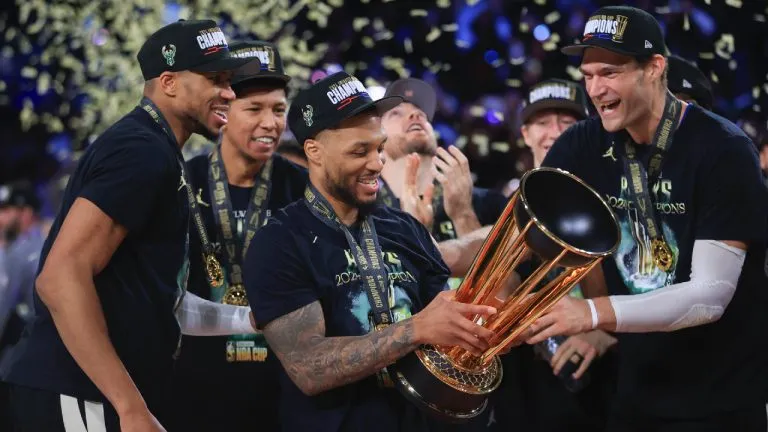
NBA standings are more than just numbers on a scoreboard. They are the heartbeat of the season, the emotional rollercoaster that fans ride from October to April, and often deep into June. Every win shifts momentum. Every loss tightens the pressure.
If you’ve ever refreshed a sports app late at night after a close game, you already understand the drama that lives inside the standings. One buzzer-beater can push a team from fifth to third. A losing streak can knock a contender into the Play-In zone overnight.
The beauty of the NBA lies in how unpredictable it feels, even though the structure of the league is clear and consistent. The Eastern and Western Conferences battle separately throughout the regular season, but their paths eventually collide in the Finals. And all along the way, the NBA standings quietly tell the real story.
How NBA Standings Shape the Season
The regular season stretches across 82 games, but not all games carry equal weight. Early in the season, the standings are fluid and forgiving. By midseason, they begin to reveal identity. By March and April, they feel like a battlefield.
The league is divided into two conferences: East and West. Within each conference, teams compete for playoff positioning. The top six teams secure automatic playoff spots. Teams ranked seventh through tenth enter the Play-In Tournament, where everything comes down to single-elimination intensity.
This structure has completely changed how fans watch the standings. In the past, finishing eighth felt like survival. Now, finishing sixth is the true safety zone. The introduction of the Play-In Tournament has made the race for sixth as dramatic as the race for first.
When we look at the NBA standings today, we aren’t just looking at who’s first and who’s last. We’re watching tiers form. We’re spotting rising teams. We’re identifying championship contenders months before the Finals begin.
NBA Standings and the Psychology of Momentum
Momentum is real in professional basketball. Coaches talk about it. Players feel it. Fans believe in it. And the standings often reflect it.
Consider how a team riding a seven-game winning streak suddenly jumps from ninth to fourth. The locker room energy shifts. Media narratives change. Analysts start using the word “contender.”
On the flip side, injuries or chemistry issues can send a top team spiraling. A three-game skid in a competitive conference can drop a team multiple spots. That’s why experienced fans watch not just the wins and losses, but the trend lines inside the NBA standings.
A team sitting in third place might look secure, but if they’ve lost five of their last seven games, alarm bells are ringing. Meanwhile, a seventh-seeded team winning consistently might be far more dangerous than their ranking suggests.
Eastern Conference Drama in the NBA Standings
The Eastern Conference has transformed in recent years. Teams like the Boston Celtics and the Milwaukee Bucks have built dominant cores, while emerging squads such as the Cleveland Cavaliers and the New York Knicks have added depth and defensive intensity.
When you examine the East portion of the NBA standings, you often see tight separation between seeds two through six. Home-court advantage becomes crucial.
In recent seasons, the difference between second and fifth place has sometimes been just two or three games. That slim margin determines who hosts a Game 7 and who travels into a hostile arena.
For fans in cities like Boston or Milwaukee, the standings aren’t just about pride. They’re about strategy, rest management, and positioning for the postseason grind.
Western Conference Chaos and the NBA Standings
If the East feels competitive, the Western Conference often feels chaotic. Teams like the Denver Nuggets, Phoenix Suns, Golden State Warriors, and Los Angeles Lakers frequently rotate through the top half of the standings.
The West is known for its depth. A team in tenth place might have the same number of wins as a team ranked sixth. That parity keeps fans constantly refreshing updates.
Watching the West side of the NBA standings often feels like watching a stock market chart. Teams surge upward after a hot stretch, then dip after a rough road trip.
Veteran teams with championship experience tend to rise late in the season. Younger squads sometimes start strong but fade under pressure. That tension is what makes the Western race unforgettable year after year.
Star Players and Their Impact on NBA Standings
Superstars influence more than highlight reels. They influence positioning.
When an MVP-caliber player goes down with an injury, the standings often shift quickly. Teams built around one dominant scorer or playmaker can struggle without that central force.
Meanwhile, teams with balanced rosters sometimes climb quietly. They don’t rely on one name. They rely on depth. Over 82 games, depth often translates into consistent movement upward in the NBA standings.
For example, when championship contenders maintain health through February and March, they tend to create separation from mid-tier teams. But in seasons where injuries are widespread, the standings tighten, and surprise teams emerge.
This unpredictability is part of what keeps fans emotionally invested.
The Play-In Era and Its Effect on NBA Standings
The introduction of the Play-In Tournament fundamentally changed how we interpret standings.
Previously, finishing eighth meant survival. Now, finishing seventh or eighth means you still have work to do. Teams ranked ninth and tenth still have hope.
This has extended meaningful competition deeper into the season. Instead of tanking early, more teams stay competitive. That makes the middle of the NBA standings more volatile and exciting.
Late-season matchups between teams ranked seventh and ninth suddenly carry playoff-level intensity. Coaches shorten rotations. Star players log heavier minutes. Fans feel the urgency.
The standings are no longer just about the top. They’re about the fight to stay relevant.
Reading Between the Lines of NBA Standings
Experienced analysts don’t just look at wins and losses. They examine point differential, strength of schedule, and road records.
A team with a strong home record but weak road performance might struggle in the playoffs. Another team with a positive point differential but a modest record might be better than their seed suggests.
This deeper analysis aligns with EEAT principles. Credibility in sports commentary comes from understanding context, not just repeating numbers.
Writers, analysts, and insiders who have covered multiple seasons know that the NBA standings are layered. They require interpretation.
It’s one thing to say a team is fourth. It’s another to explain why that fourth-place ranking might be misleading based on injuries or schedule density.
How Fans Use NBA Standings Daily
For fans, the standings are part of routine. Morning coffee often comes with a quick glance at updated rankings.
Fantasy basketball managers check positioning to anticipate rest days. Sports bettors analyze shifts before placing wagers. Casual fans track their favorite teams’ climb toward playoff security.
In major basketball cities, talk radio and podcasts revolve around movement within the NBA standings. One unexpected loss can dominate headlines for days.
Even social media reacts instantly. Memes, debates, and predictions flood timelines after every shift.
The standings are not static data. They are living, breathing narratives that shape conversation across the sports world.
Media Coverage and the Influence of NBA Standings
Major sports networks dedicate entire segments to analyzing standings. Trade deadline discussions often revolve around positioning.
If a team is fourth but clearly lacking depth, executives might make aggressive moves. If a team is ninth and fading, management may pivot toward rebuilding.
The NBA standings influence front-office decisions just as much as they influence fan emotions.
Veteran journalists who cover the league build trust by interpreting these patterns accurately. That trust is central to EEAT-based sports writing.
Readers value insight backed by experience, historical awareness, and transparent analysis.
Historical Patterns in NBA Standings
History shows that teams finishing in the top three of their conference have a significantly stronger chance of reaching the Finals.
While lower seeds occasionally make dramatic runs, consistency across the regular season usually translates into playoff success.
However, there are memorable exceptions. Underdog teams have surged late, entering the postseason with momentum that the standings alone didn’t fully capture.
This tension between statistical probability and emotional momentum is what makes the league compelling.
The standings provide structure. The games provide unpredictability.
Digital Era and Real-Time NBA Standings
Technology has changed how quickly fans access standings.
Gone are the days of waiting for the morning newspaper. Now, updates are instant. Apps refresh within seconds of a final buzzer.
This immediacy increases emotional engagement. A late-night overtime thriller immediately reshapes playoff scenarios.
As a result, the NBA standings feel more interactive than ever before. Fans aren’t just observers. They are participants in real-time discussion.
Why NBA Standings Matter More Than Ever
The league has become more competitive, more global, and more analytically driven.
With international talent expanding and team-building strategies evolving, parity has increased. Fewer teams dominate for long stretches.
That parity compresses the standings. Every loss feels heavier. Every win feels strategic.
For players, standings determine playoff matchups and travel schedules. For coaches, they shape game plans. For executives, they influence trade strategy.
For fans, they represent hope.
When your team climbs into the top six, optimism grows. When they slide into tenth, anxiety builds.
The emotional spectrum tied to the NBA standings is unmatched in professional sports.
The Business Side of NBA Standings
Beyond competition, standings influence revenue.
Playoff appearances increase ticket sales, sponsorship visibility, and merchandise demand. Teams fighting for positioning often see spikes in attendance during crucial late-season games.
Television ratings rise when playoff races tighten. National broadcasts frequently flex games that have major standings implications.
In this sense, the NBA standings drive business performance just as much as athletic performance.
Trustworthy Analysis in the Era of Hot Takes
In the modern sports landscape, bold predictions dominate social media. But reliable analysis requires more than loud opinions.
EEAT-focused content emphasizes expertise and transparency. It acknowledges uncertainty while presenting evidence-based insights.
When discussing the NBA standings, credible analysis highlights context such as schedule difficulty, injury timelines, and roster chemistry.
Readers appreciate commentary that respects nuance instead of chasing viral reactions.
That’s why in-depth, balanced discussions about standings continue to resonate with serious basketball fans.
Tracking the Road Ahead in NBA Standings
As the season progresses, the final month becomes electric.
Teams rest stars strategically. Coaches experiment with rotations. Fans calculate magic numbers.
Every night carries implications. A single win can secure home-court advantage. A single loss can drop a team into the Play-In.
The NBA standings at this stage feel like a live scoreboard for the entire league’s destiny.
And as the playoffs begin, the regular-season standings become a reference point. Analysts compare seeds, matchups, and historical outcomes.
The journey from October to April is long, but it’s the standings that guide us through it.
In the end, basketball is played on hardwood floors, not spreadsheets. Yet without the structure of standings, the season would feel chaotic.
Read also :-
kansas city chiefs vs philadelphia eagles match player stats
golden state warriors vs houston rockets match player stats
pacers vs cleveland cavaliers match player stats
cleveland cavaliers vs pacers match player stats
golden state warriors vs timberwolves match player stats